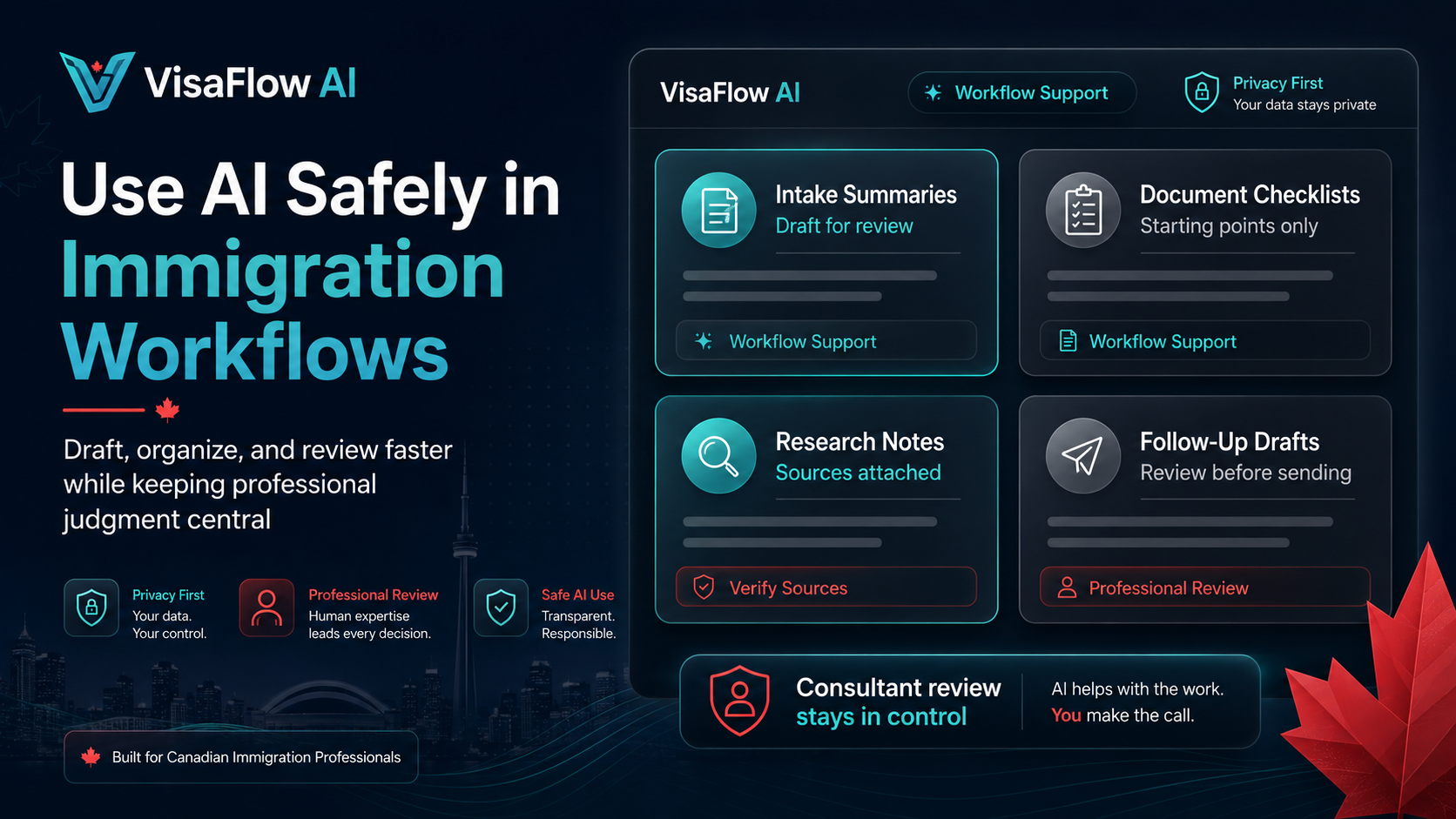
Where AI Fits in Immigration Workflows
Immigration consultants handle structured tasks every day: client intake, document tracking, checklist preparation, draft correspondence, internal notes, and source research. AI-assisted workflow tools can help produce first drafts and organize material faster while keeping professional review in control.
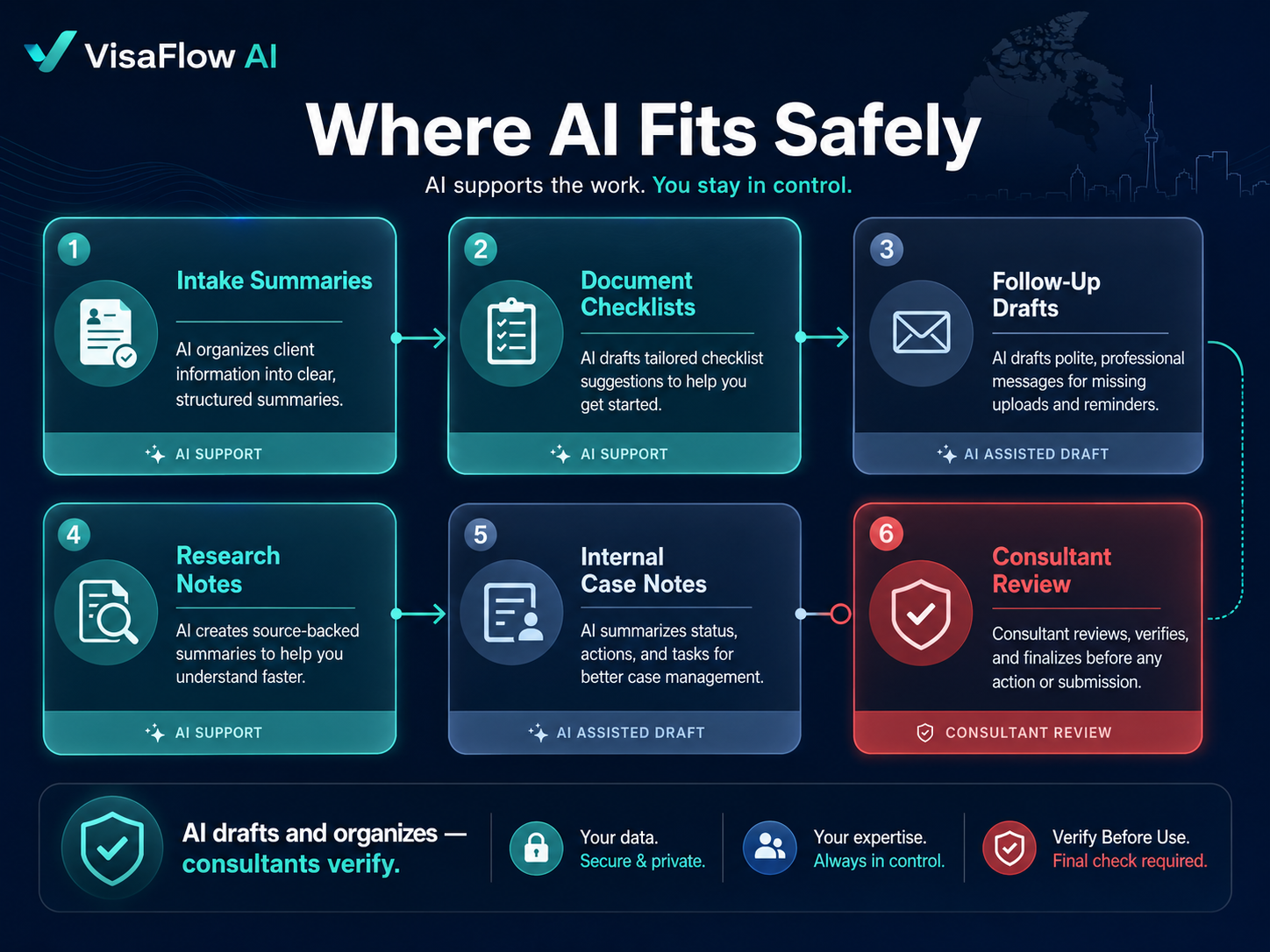
Common safe-use areas include:
- Intake summaries: AI can organize client-provided facts into a draft summary for consultant review.
- Document checklists: Generate a starting checklist based on application type and known requirements.
- Follow-up drafts: Create draft email reminders for missing uploads or expiring documents.
- Research notes: Structure source-backed information with citations for consultant verification.
- Internal case notes: Draft status updates and task summaries from structured case details.
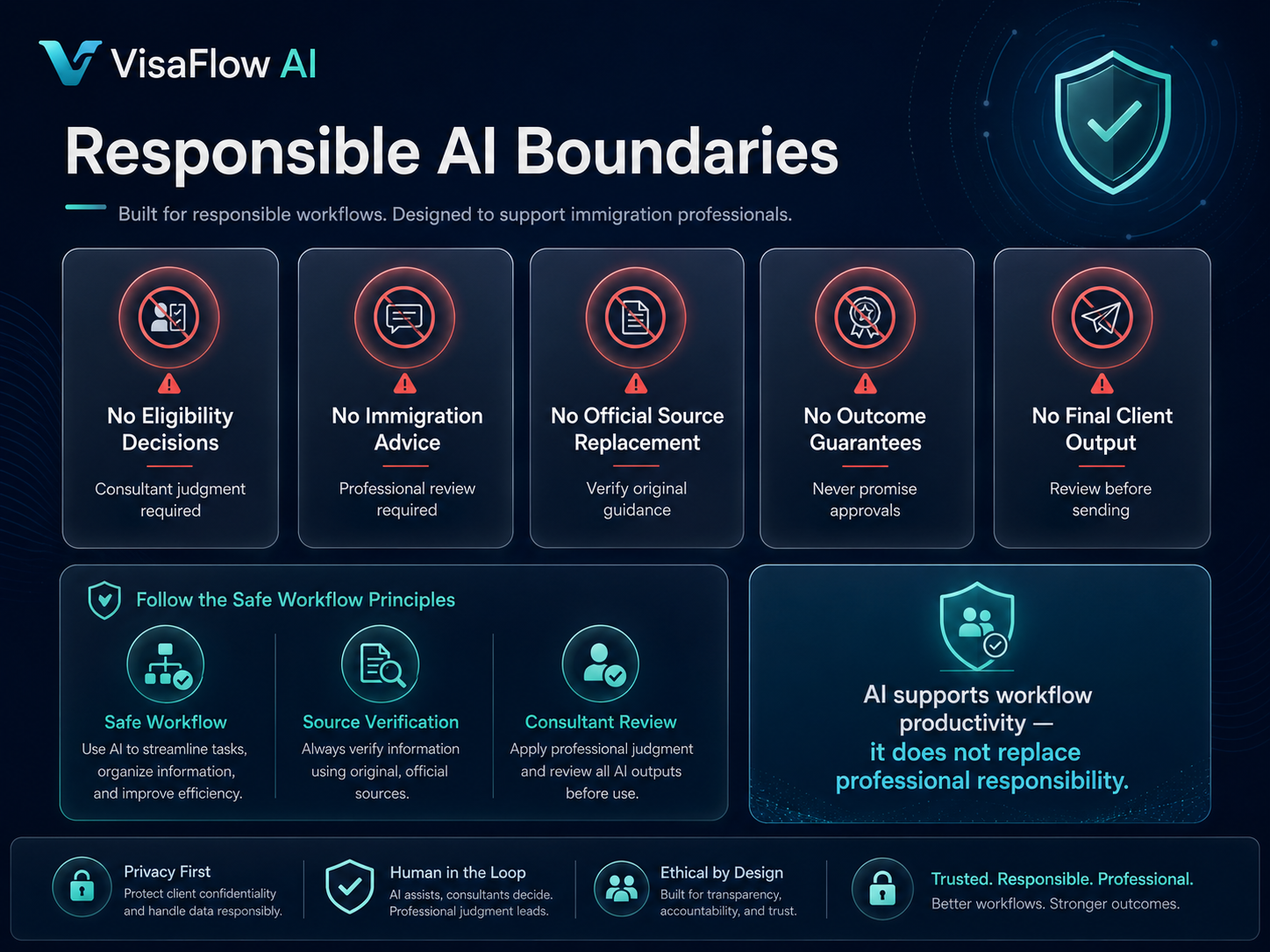
Setting Boundaries for Responsible AI Use
Safe AI use starts with clear boundaries. AI should never make eligibility decisions, provide immigration advice, or be treated as an official source. The consultant remains responsible for reviewing every output, verifying information against official IRCC sources, and deciding what reaches the client.
A good AI workflow tool makes review explicit, keeps source material accessible, and avoids promising outcomes. If a tool cannot explain where its information came from, it is not suitable for immigration work.
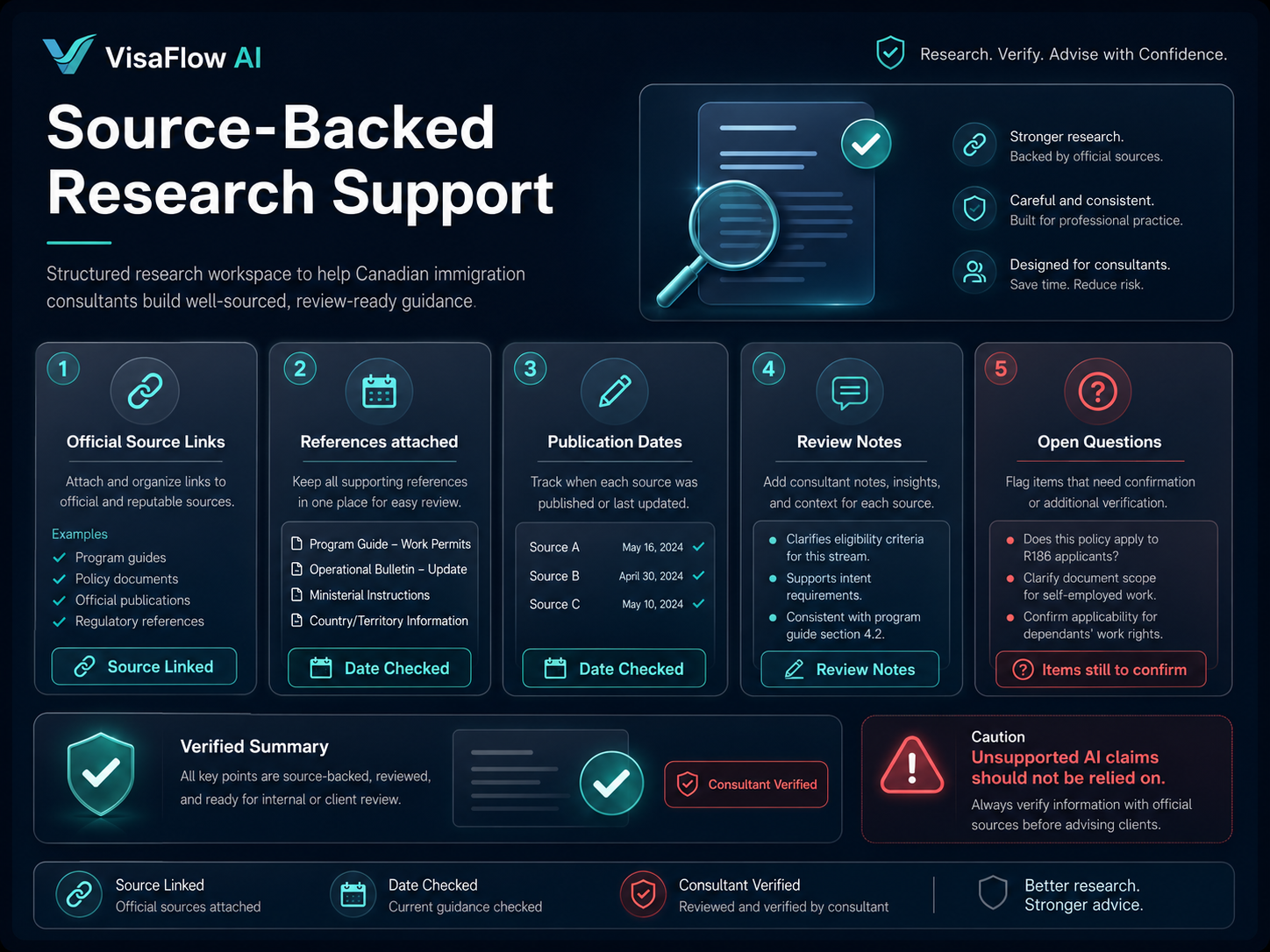
Source-Backed Research Support
Immigration work depends on accurate, current information from official sources. AI tools are most useful when they help organize and surface source-backed material rather than generate unsupported claims. Consultants should look for tools that keep IRCC references, publication dates, and internal review notes attached to the file.
Client Privacy and Data Handling
Canadian immigration teams handle sensitive client information. AI workflow tools should support privacy-conscious practices, secure file storage, and clear access controls. Consultants should verify where client data is stored, who can access it, and how it is used by the software provider.
Evaluating AI Tools for Immigration Work
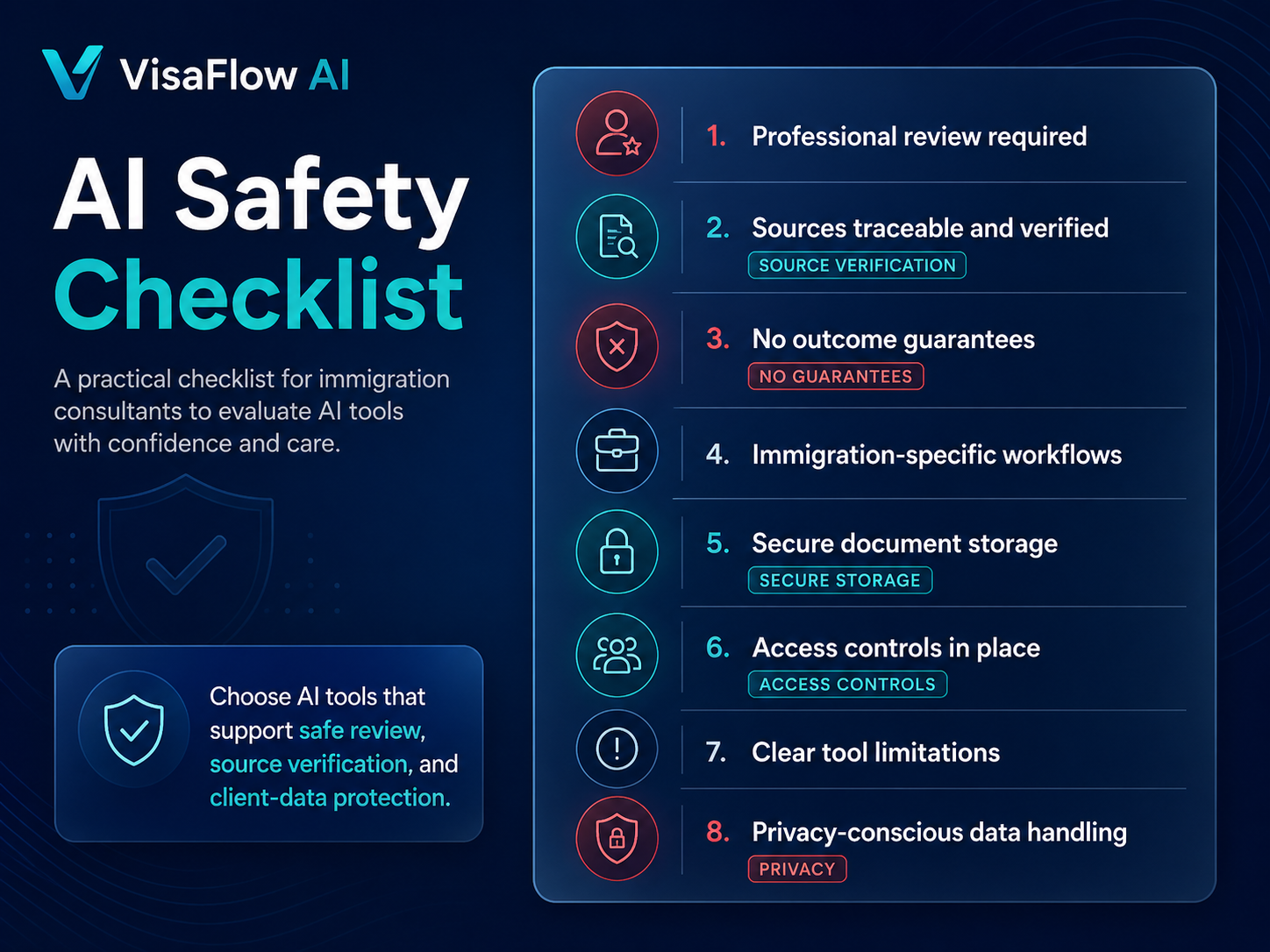
Safety Checklist for AI Tools
- Does the tool require professional review before outputs are final?
- Can sources be traced and verified?
- Does the tool avoid making outcome guarantees?
- Does it support immigration-specific workflows, not just generic chat?
- Are client documents stored securely with access controls?
- Does the provider clearly state what the tool does not do?
How VisaFlow AI Approaches Safe AI Use
VisaFlow AI is built around review-first workflows. AI can help draft checklists, summaries, and follow-ups, but consultants stay responsible for review, judgment, and final communication. The platform supports source-backed research, secure file organization, and team-based review steps.
Read more about how immigration consultants can save time with AI while keeping professional oversight in place.
Frequently Asked Questions
Yes. AI tools can support productivity tasks like drafting, summarizing, and organizing information. Consultants must review and verify all outputs before use.
No. VisaFlow AI is productivity and research-support software. It does not provide legal advice, immigration representation, or guaranteed outcomes.
It depends on the tool. Look for secure file storage, access controls, and clear privacy policies. VisaFlow AI is designed around secure, privacy-conscious workflows.
VisaFlow AI supports workflow productivity and information organization. It does not provide legal advice, replace professional judgment, guarantee outcomes, or act as an official source. Users must verify outputs against official guidance.