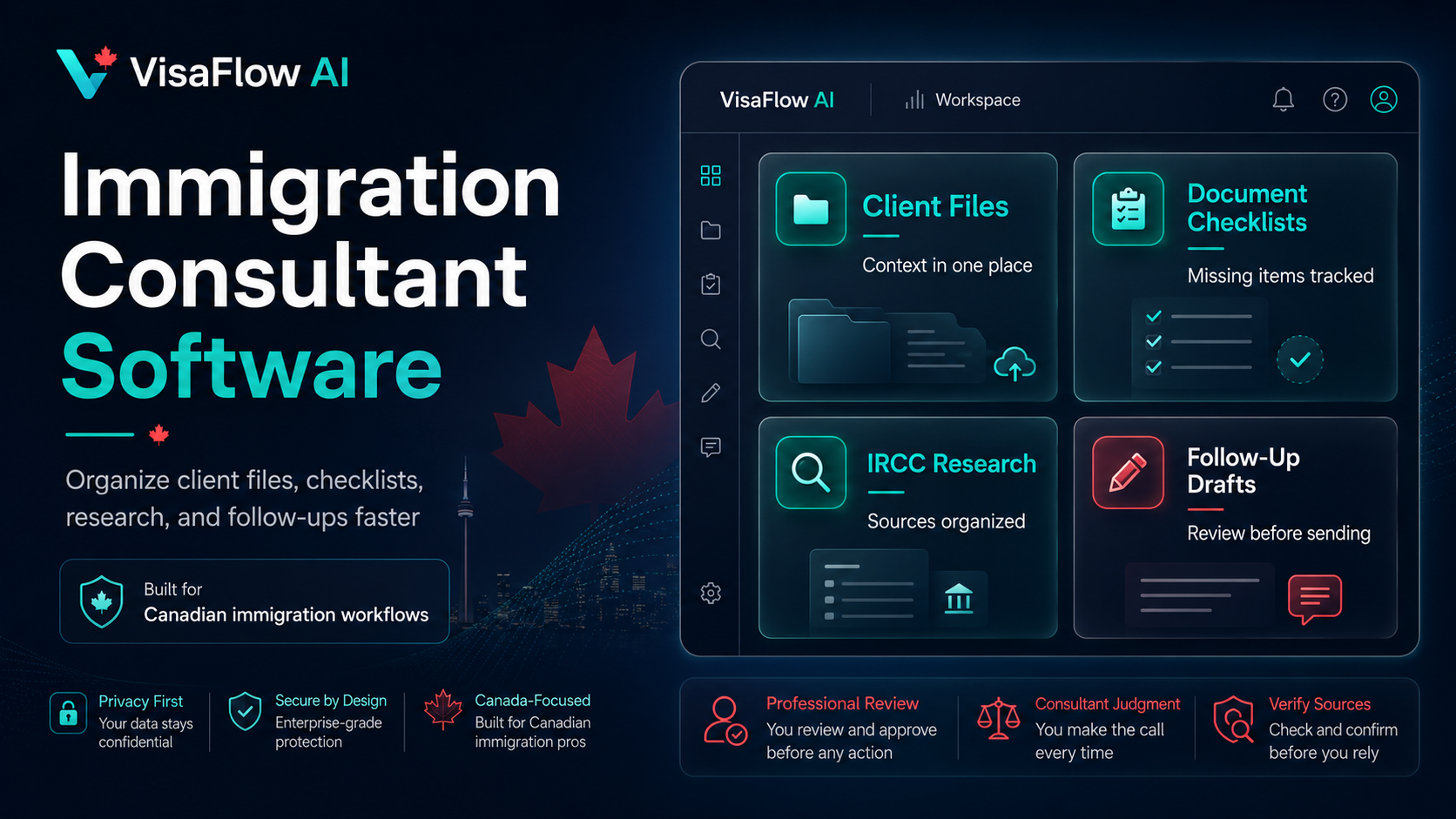
What Immigration Consultant Software Should Actually Solve
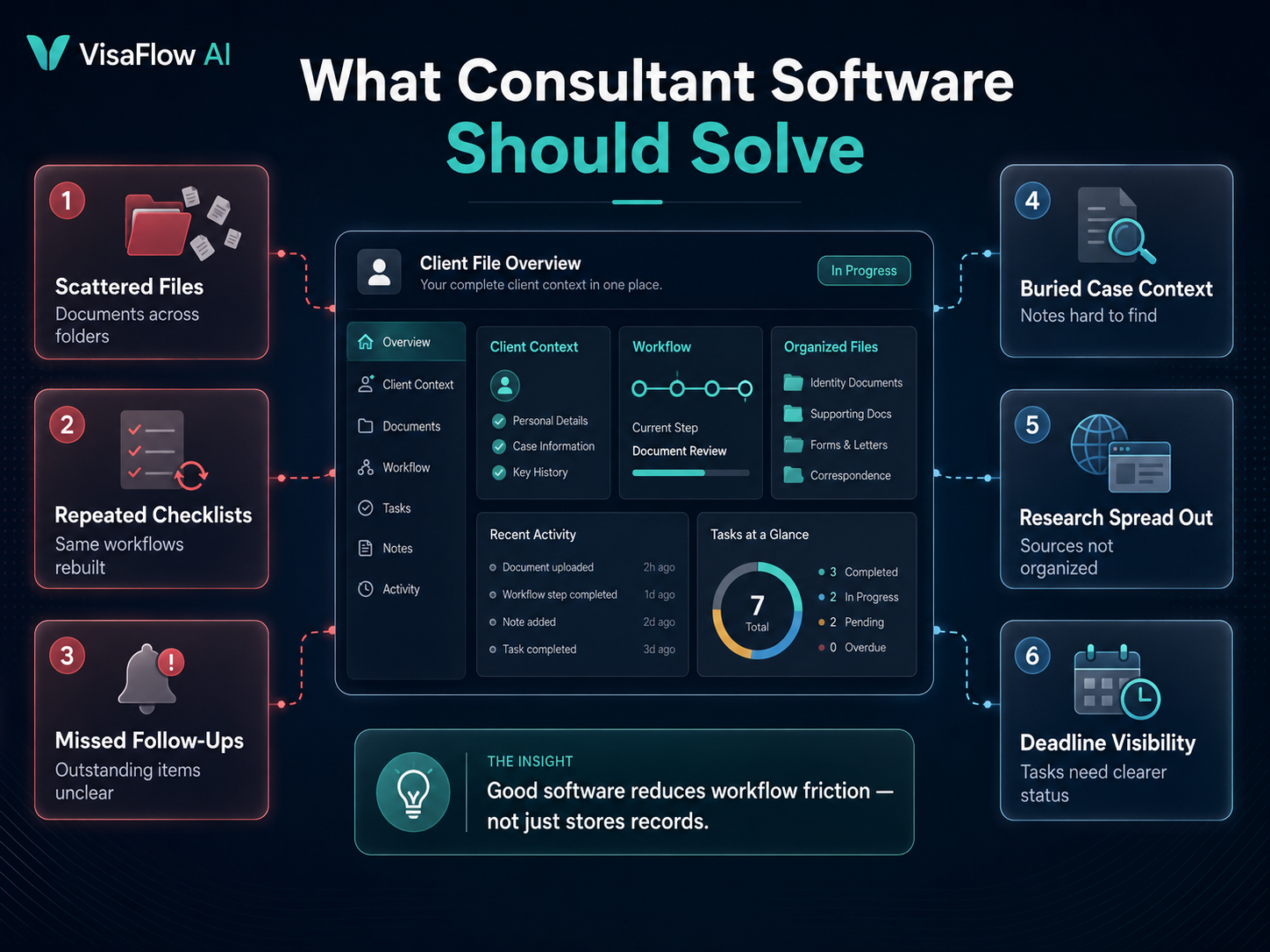
Canadian immigration consultants manage a uniquely document-heavy workflow. A single client file can include intake details, identity documents, forms, supporting evidence, status notes, deadlines, source research, and repeated follow-ups. Software is only useful if it reduces the friction around those tasks.
Good immigration consultant software should help consultants keep client context organized, track required documents, standardize workflows, and reduce repetitive drafting. It should not simply be a generic CRM with a few custom fields.
Core Features to Prioritize
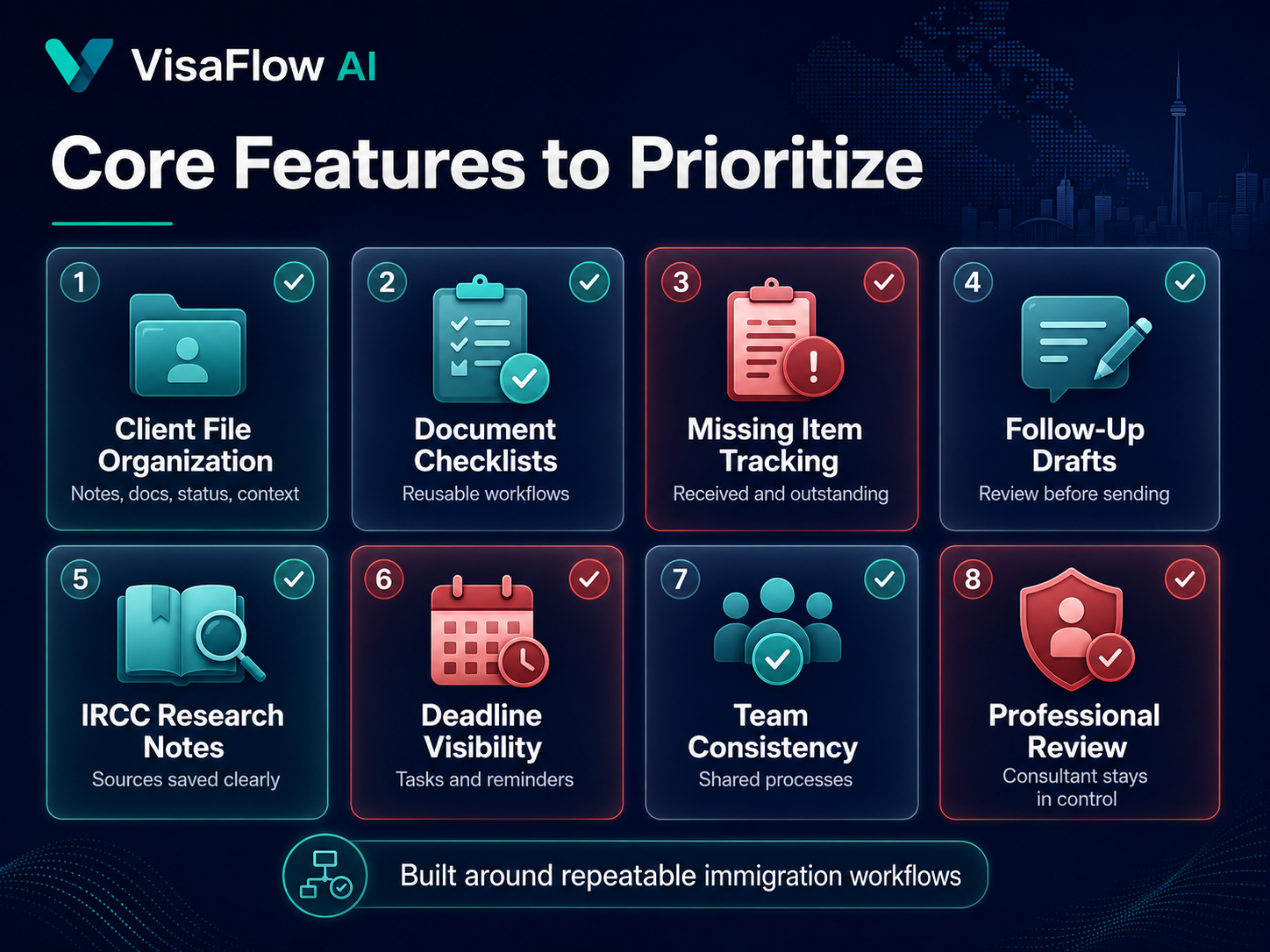
When evaluating a platform, start with the work you repeat every week:
- Client file organization: one place for notes, documents, status, and context.
- Document checklists: reusable workflows for common application types.
- Missing item tracking: a clear view of what has been received and what is outstanding.
- Client communication drafts: faster follow-ups that still require professional review.
- IRCC research organization: source-backed notes that can be checked later.
- Deadline visibility: reminders and task status across active files.
- Team consistency: shared processes so files are handled the same way.
Why Immigration-Specific Workflows Matter
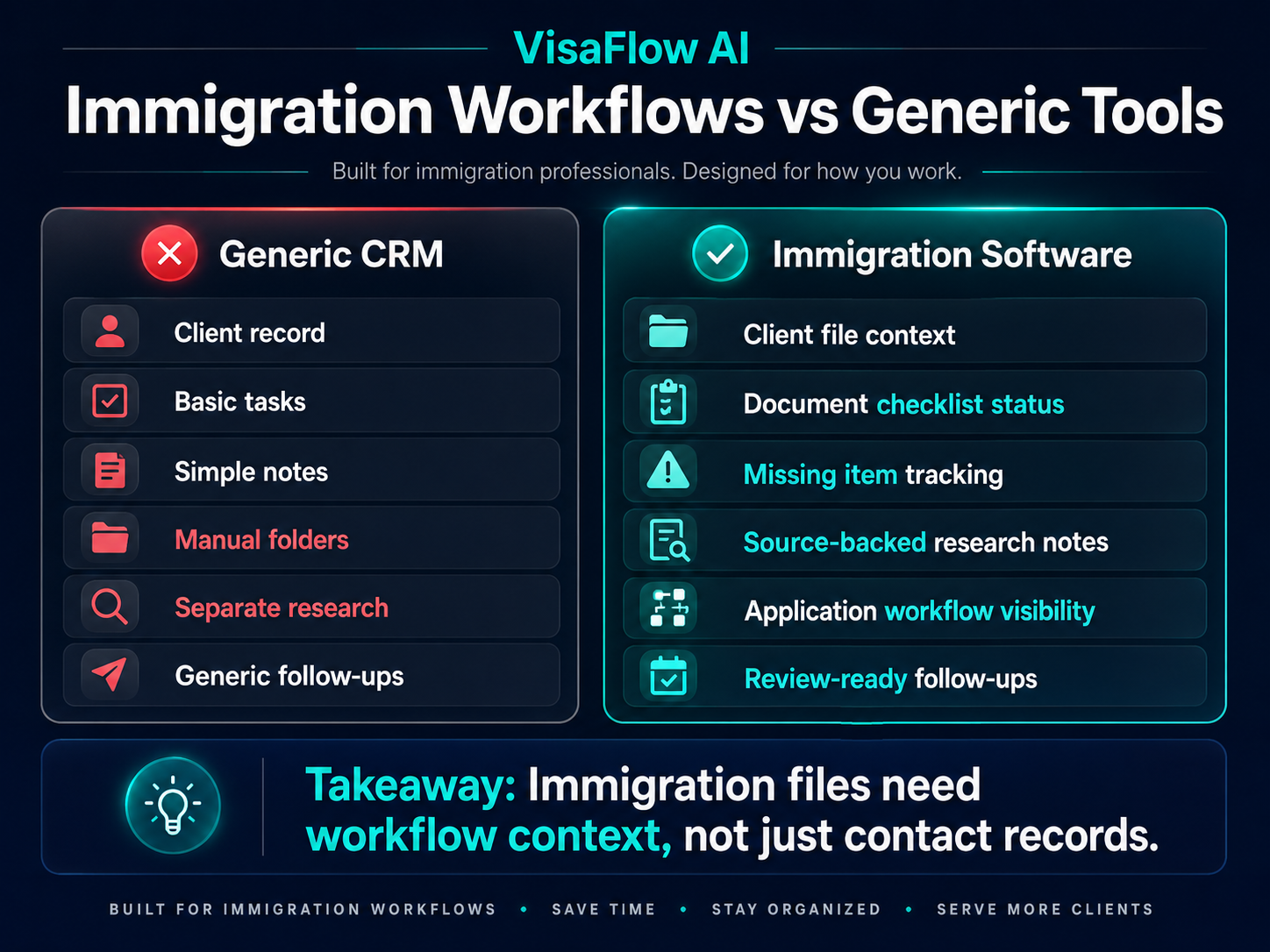
Generic tools can track tasks, but they rarely understand the structure of immigration practice. Immigration files depend on evidence, document completeness, program-specific requirements, and careful review. A platform built for immigration workflows should make those patterns visible instead of hiding them inside notes and folders.
For example, a generic CRM may store a client record. But an immigration-focused workflow should also help you see which documents are missing, which checklist applies, what source guidance was reviewed, and what follow-up needs to be sent.
Where AI Can Help
AI can be useful in immigration consultant software when it supports repeatable workflow tasks. It can help draft client messages, organize intake information, summarize notes, create checklist drafts, and prepare research summaries. The important boundary is that AI should support the consultant, not replace the consultant.
VisaFlow AI is designed around that boundary. It helps reduce repetitive work while keeping professional review, verification, and judgment in the consultant's hands.
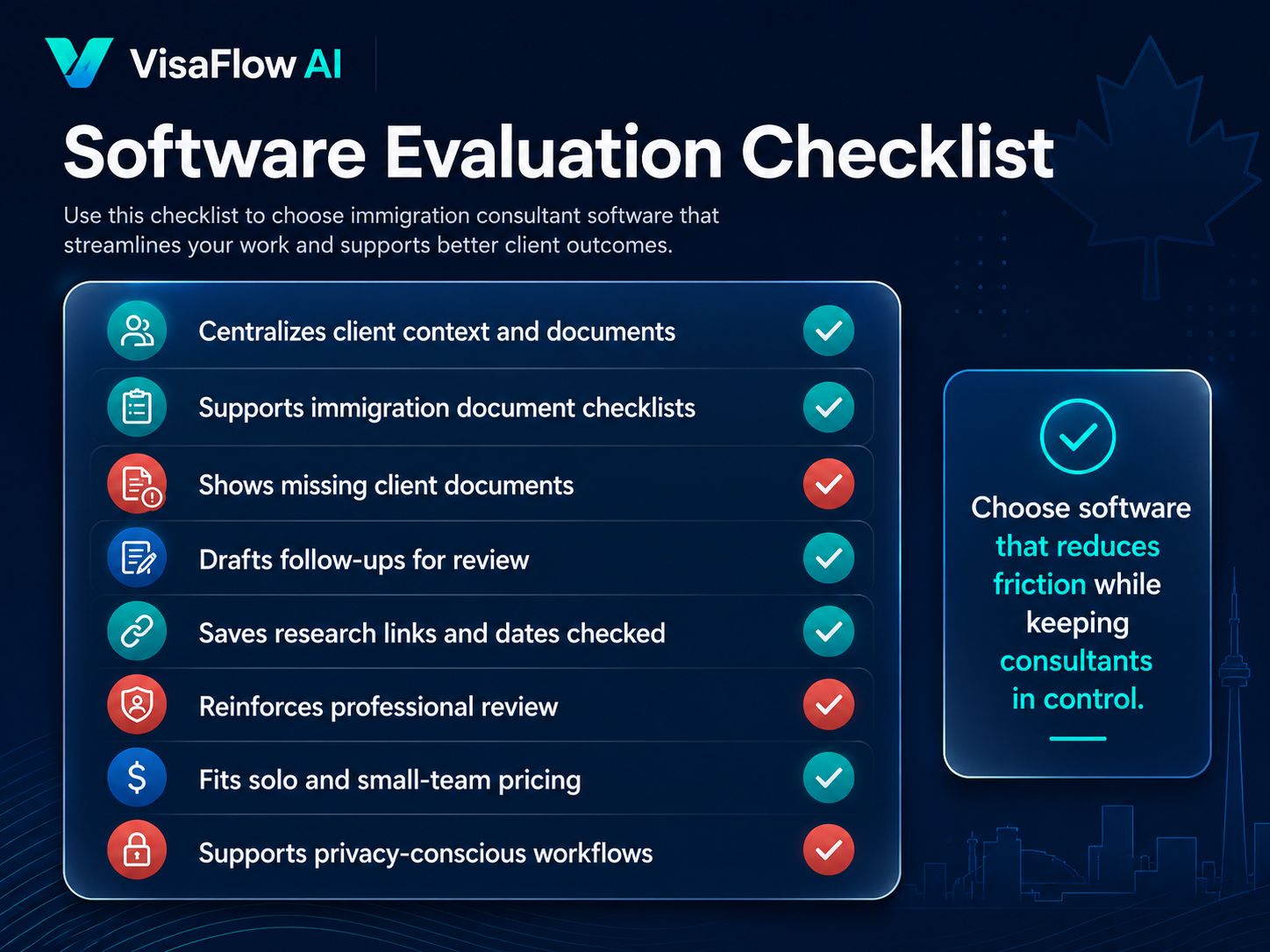
Evaluation Checklist
- Can the platform centralize client context and documents?
- Does it support immigration-specific document checklists?
- Can you quickly see missing client documents?
- Does it help draft follow-ups without sending automatically?
- Can research notes include source links and dates checked?
- Does the workflow reinforce professional review?
- Is pricing realistic for a solo consultant or small team?
How VisaFlow AI Fits
VisaFlow AI is built as an AI-assisted workspace for Canadian immigration consultants. It focuses on client file organization, document checklist workflows, follow-up drafting, and research support. It does not provide legal advice, guarantee outcomes, or replace professional judgment.
See the features page for the workflow areas VisaFlow supports, or review pricing for solo consultants and growing teams.
Frequently Asked Questions
Immigration consultant software is a platform that helps immigration professionals organize client files, documents, notes, deadlines, communication, and workflows related to immigration cases.
Immigration-specific software is usually more useful than generic tools because it can support document checklists, client file workflows, IRCC research organization, and repeatable immigration processes.
Yes, when used as a productivity aid. AI can help draft messages, summarize information, and organize checklists, but consultants must review and verify all outputs.
No. VisaFlow AI is an independent productivity tool and is not affiliated with IRCC, the Government of Canada, or CICC.
VisaFlow AI supports workflow productivity for immigration professionals. It does not provide legal advice, replace professional judgment, guarantee immigration outcomes, or act as an official IRCC source. All outputs must be reviewed and verified by the user.